
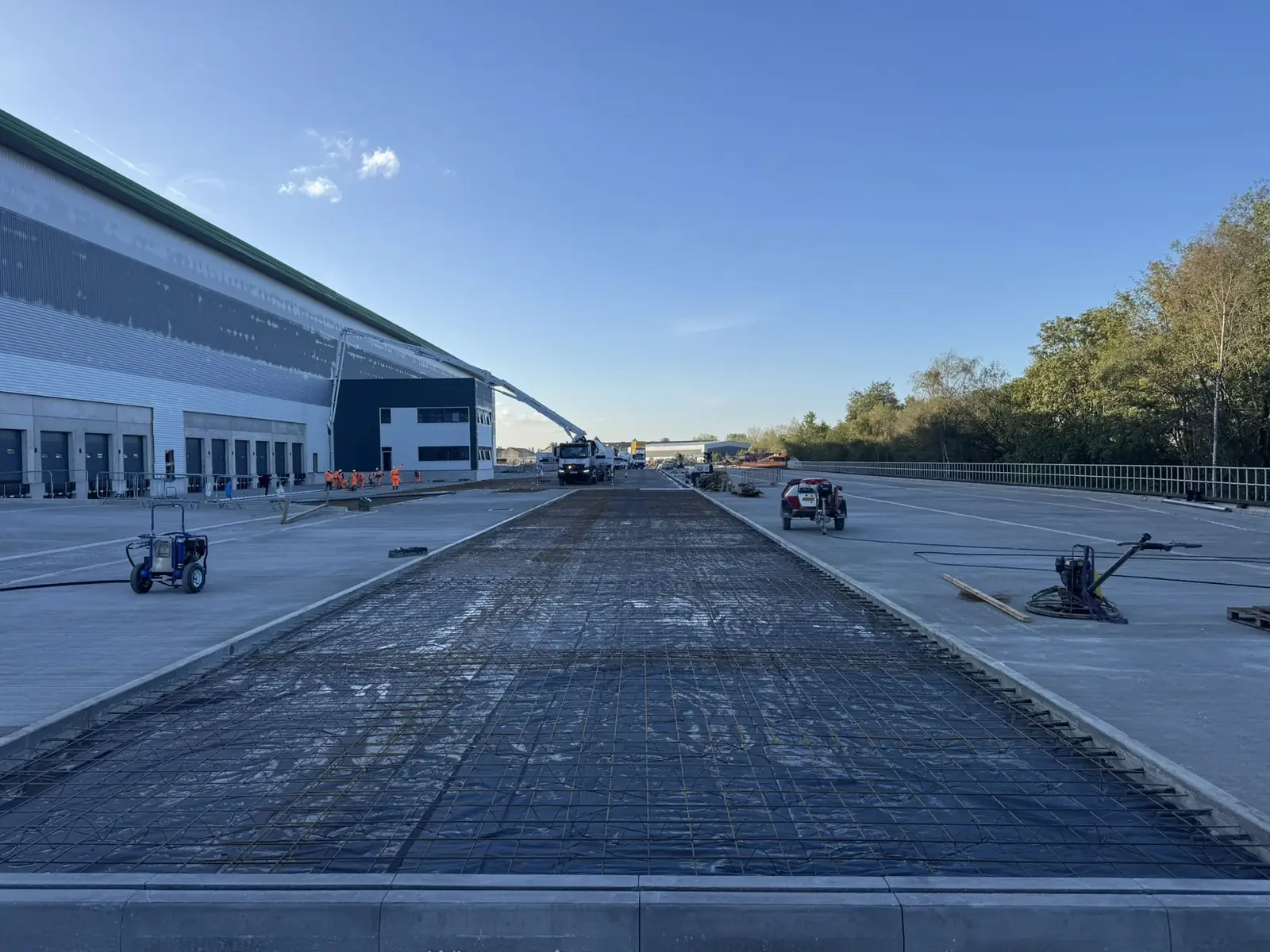
QA/QC & site inspection
Independent inspection of reinforced concrete frames, groundworks and industrial ground-bearing slabs while they are being built. We work to your ITP — or write one — and run it hold point by hold point, as a resident appointment or on call for key pours.
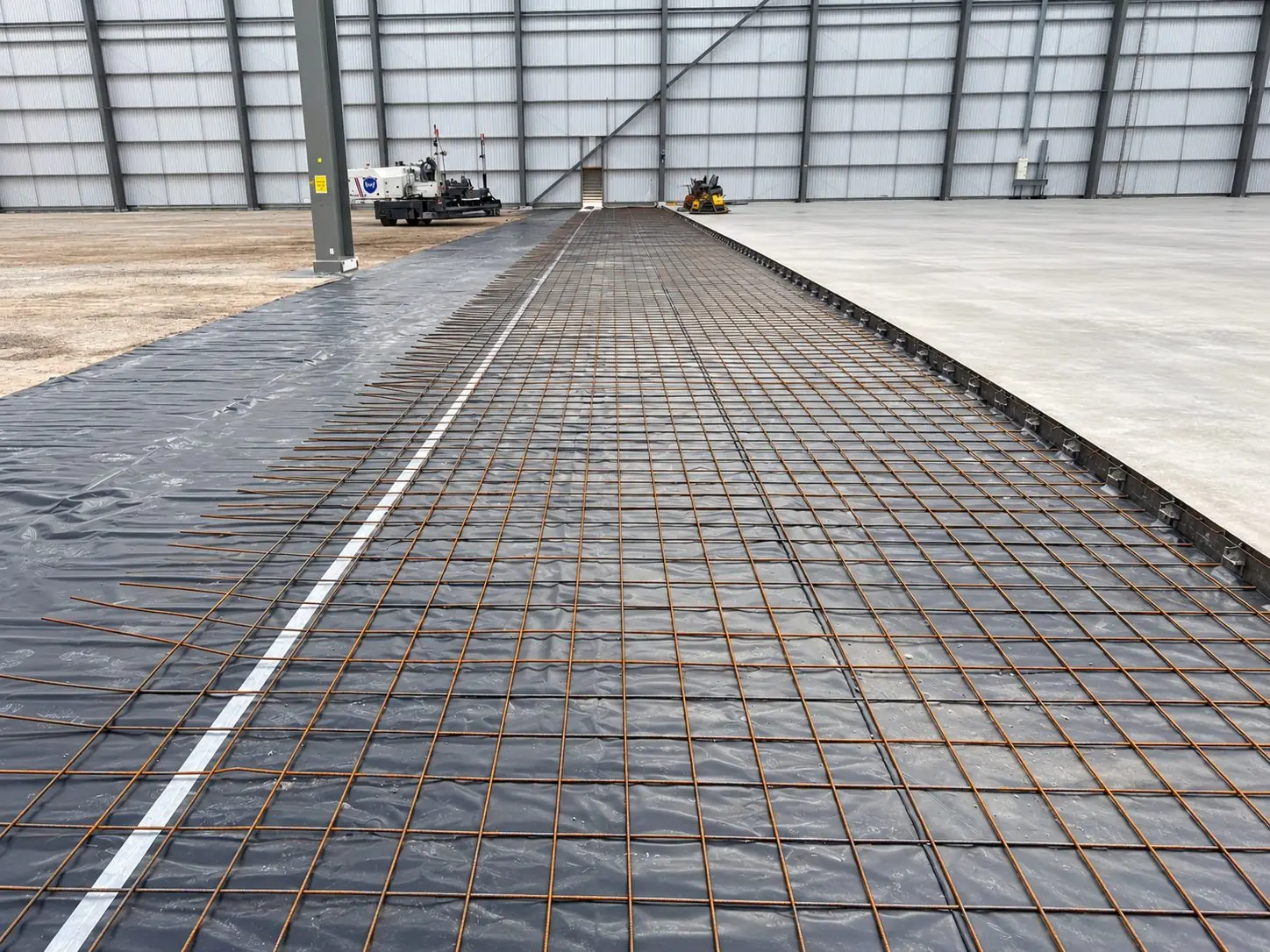
- Reinforcement, cover, laps and fixing
- Formwork, falsework and setting out
- Embedments, penetrations and cast-in items
- Construction and movement joints
- Placement, compaction, finishing and curing
- Slab levels, thickness and dowels
- Inspection and test plans and checklists
- Signed pre-pour release records
- Non-conformance register, tracked to close-out
- Photographic evidence, referenced to location
- Test results traced to the pour
- Completion record pack for handover
Clerk of Works
A Clerk of Works is the client's representative on site. We observe, record and report on the quality of the works against the contract documents — independently of the contractor, and directly to you or your funder. We don't direct the works; we make sure you know exactly what is being built.
Full-time, part-time or visit-based, scaled to the risk of the job.

Defect investigation & specification review
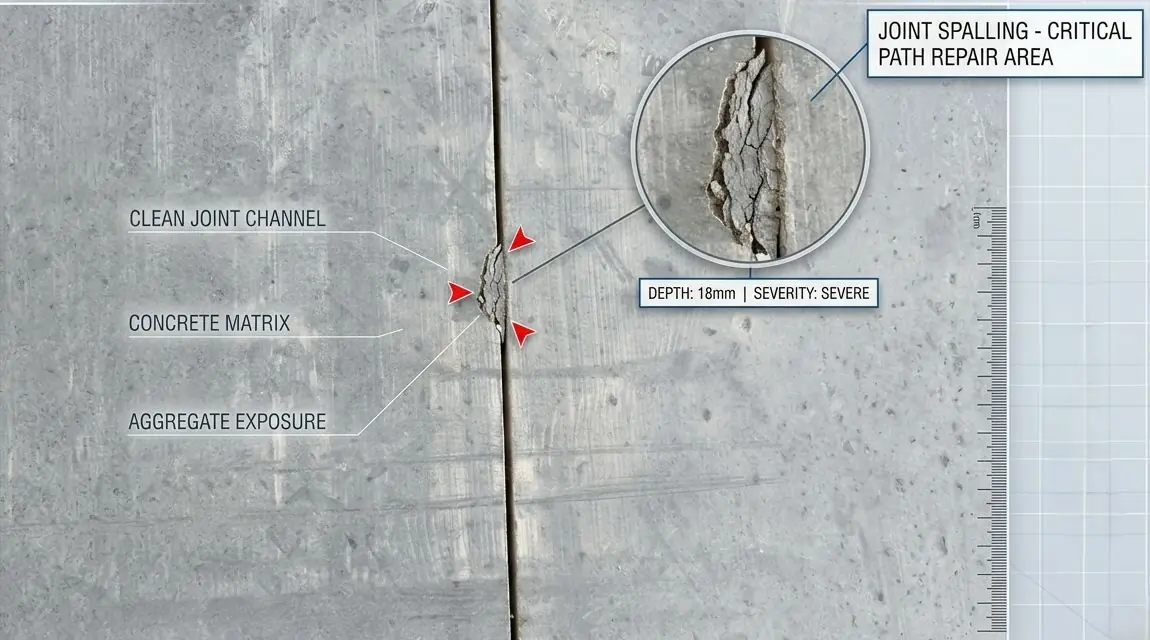
When concrete underperforms — cracking, curling, delamination, spalling joints, low cover, honeycombing — we establish what happened from evidence: the records, the materials, the site, and non-destructive testing where it helps. Before construction, we review specifications, details and ITPs so the same problems are designed out.
Professional snagging
Systematic pre-handover inspection of apartments, houses and commercial space. Every defect is logged, located, photographed and assigned — then re-inspected until it is closed. You hand over on evidence, not on a walk-round.
For developers, main contractors and build-to-rent operators taking over completed plots.

| REF | LOCATION | ITEM | STATUS |
|---|---|---|---|
| B7-014 | Apt 7.03 · Kitchen | Worktop joint open | Closed |
| B7-015 | Apt 7.03 · Bed 1 | Door binding on frame | Re-inspect |
| B7-016 | Corridor · Riser 2 | Fire-stopping incomplete | Open |
| B7-017 | Apt 7.05 · Bathroom | Silicone bead missing | Closed |
Floor flatness & abrasion testing
Surface regularity surveys and abrasion resistance testing of industrial ground floors to TR34, 4th edition, reported against the class in your specification. TR34 asks for the survey within one month of completing the floor, or a major section of it, so the as-built result is on record before racking, automation or applied finishes go in.
For flooring contractors who need compliance evidence at handover, and for developers, occupiers and racking installers who need to know the floor meets the specification before they rely on it.
How a TR34 flatness survey works →
| CLASS | TYPICAL USE | PROP. E | PROP. F |
|---|---|---|---|
| FM1 | Very high flatness and levelness. Reach trucks above 13 m without side-shift. | 4.5 | 1.8 |
| FM2 | Reach trucks 8–13 m without side-shift. TR34’s suggested class where racking is not yet known. | 6.5 | 2.0 |
| FM3 | Retail floors with directly applied flooring. Reach trucks up to 8 m without side-shift, or up to 13 m with it. | 8.0 | 2.2 |
| FM4 | Retail floors to take applied screeds. Workshops with lift heights up to 4 m. | 10.0 | 2.4 |
Property E controls levelness (level difference between grid points 3 m apart); Property F controls flatness (change in level difference over consecutive 300 mm steps). Separately, every grid point must lie within ±15 mm of datum.
Before you appoint us
What is the difference between a Clerk of Works and a QA/QC consultant?
A Clerk of Works represents the client and reports on the contractor's work. A QA/QC consultant is often appointed by the contractor to run its quality system and inspections. We do both — and we tell you at the outset which role we are in and who we report to.
When should we bring you in?
Before the first pour, ideally before the ITP is finalised. Inspection can't recover evidence that has already been covered. For investigations, as soon as the defect is noticed and before any repair work disturbs it.
When should a floor flatness survey be done?
TR34 recommends surveying within one month of completing the whole floor or a major section of it, to confirm the as-built floor meets the specification. Surveys can also be done during construction as a quality check. Over time, floor levels can change through slab deflection, settlement or curling at joints, so a later survey shows the floor as it is now, not as it was built. If racking or VNA trucks are going in, survey before they do.
What happens if the floor fails?
The report shows exactly where, and by how much, the floor is out of tolerance, so the right correction can be agreed. That is usually grinding of high spots, and in VNA aisles grinding of the wheel tracks so the truck wheels stay in full contact with the floor; occasionally it is filling of low areas. We can scope the remedial work and re-survey the affected areas afterwards. If we carry out the remedial work ourselves, the re-survey report says so on its first page.
Where do you work?
We are based in the West Midlands and work across the UK and Europe, in English or German. We inspect to the rules that apply where you build: British Standards in the UK, DIN and DIN EN in Germany, and the EN standards with the relevant National Annex elsewhere in Europe. Resident appointments, part-time and visit-based inspection are all available.